
Phase 2 — Launching
Tennessee is not an expansion. It is a rescue mission for one of the rarest natural phenomena left in North America.
Most people alive today have never seen synchronous fireflies. Photinus carolinus, the species found in the Great Smoky Mountains region of Tennessee, flash in coordinated waves, thousands of individuals pulsing together in the darkness of old growth forest. It is one of the most breathtaking things a human being can witness in nature. And it is disappearing.
Light pollution drowns their signals. Pesticide drift kills them in the larval stage before they ever learn to fly. Habitat loss removes the moist leaf-litter forest floor where they spend two years as larvae before a single night of flight. The Tennessee satellite of the Meli Preserve exists specifically to protect this phenomenon and everything around it that makes it possible.
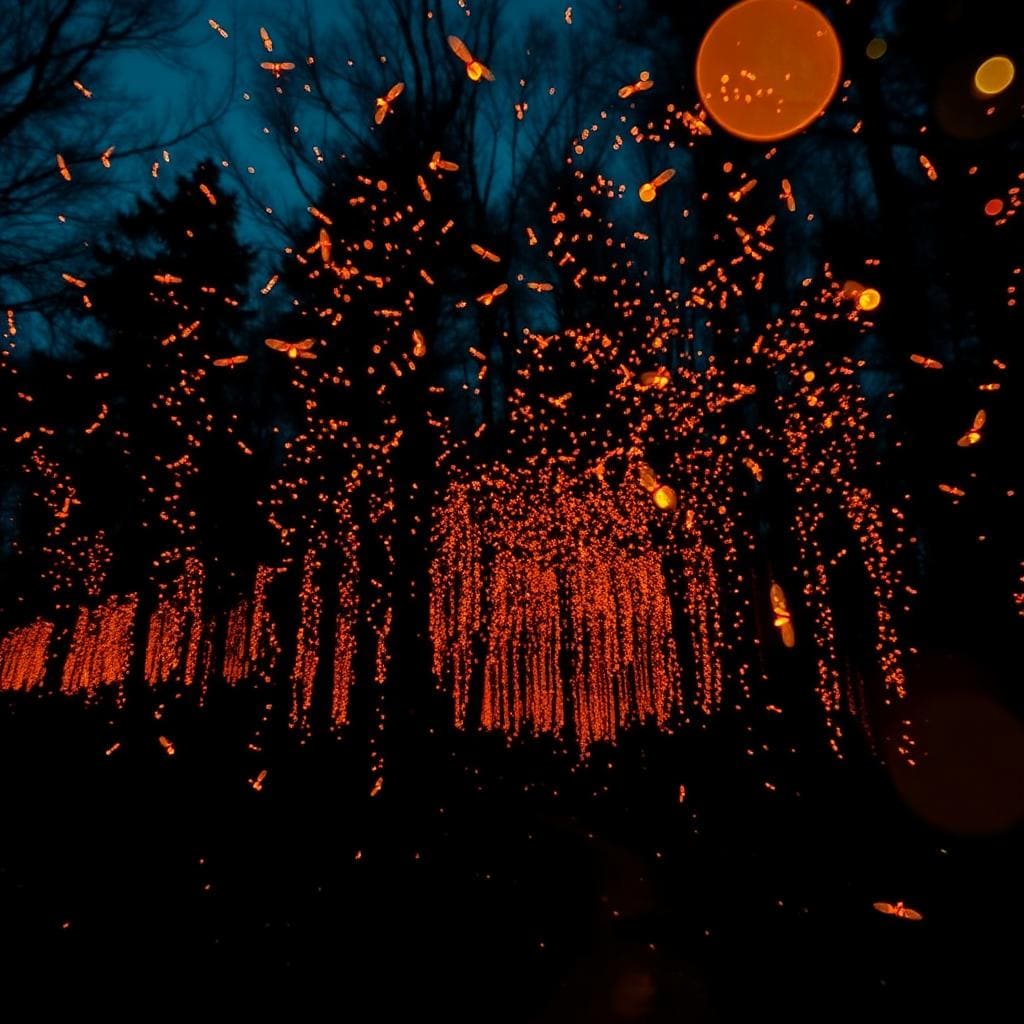
Native grasses, moisture-preserving soil, deep leaf litter zones, and zero artificial light after dark. Everything the larvae need for two years underground before they emerge.
Apple, pear, pawpaw, chestnut, walnut, and hickory integrated with native flowering understory species. A different climate, the same bee-first design philosophy.
Purple coneflower, black-eyed Susan, native bee balm, milkweed, and goldenrod selected for continuous bloom through the full Tennessee growing season.
The Tennessee satellite is being developed with full dark-sky certification as a primary objective. The fireflies require it and so does every other nocturnal species on the property.
Natural stream features and constructed ponds providing dragonfly breeding habitat and natural mosquito control across the entire Tennessee property.
Ticketed small-group nighttime experiences timed to synchronous firefly season. Among the most sought-after conservation experiences we will ever offer.
Tennessee Firefly Nights will be announced to waitlist members first. These experiences will fill within hours of opening.